Basement moisture often shows up gradually as a faint odor, a stain or a patch of paint that will not hold. Several causes can look alike from across the room, so the goal is to identify the signs, check what you can yourself, and take first steps that keep a small problem from growing while you find out what is happening.
Visible Signs That Water Has Reached the Basement
Look at what you can see and smell on a dry day, then again after a heavy rain. These signs point to water entering or staying in the space:
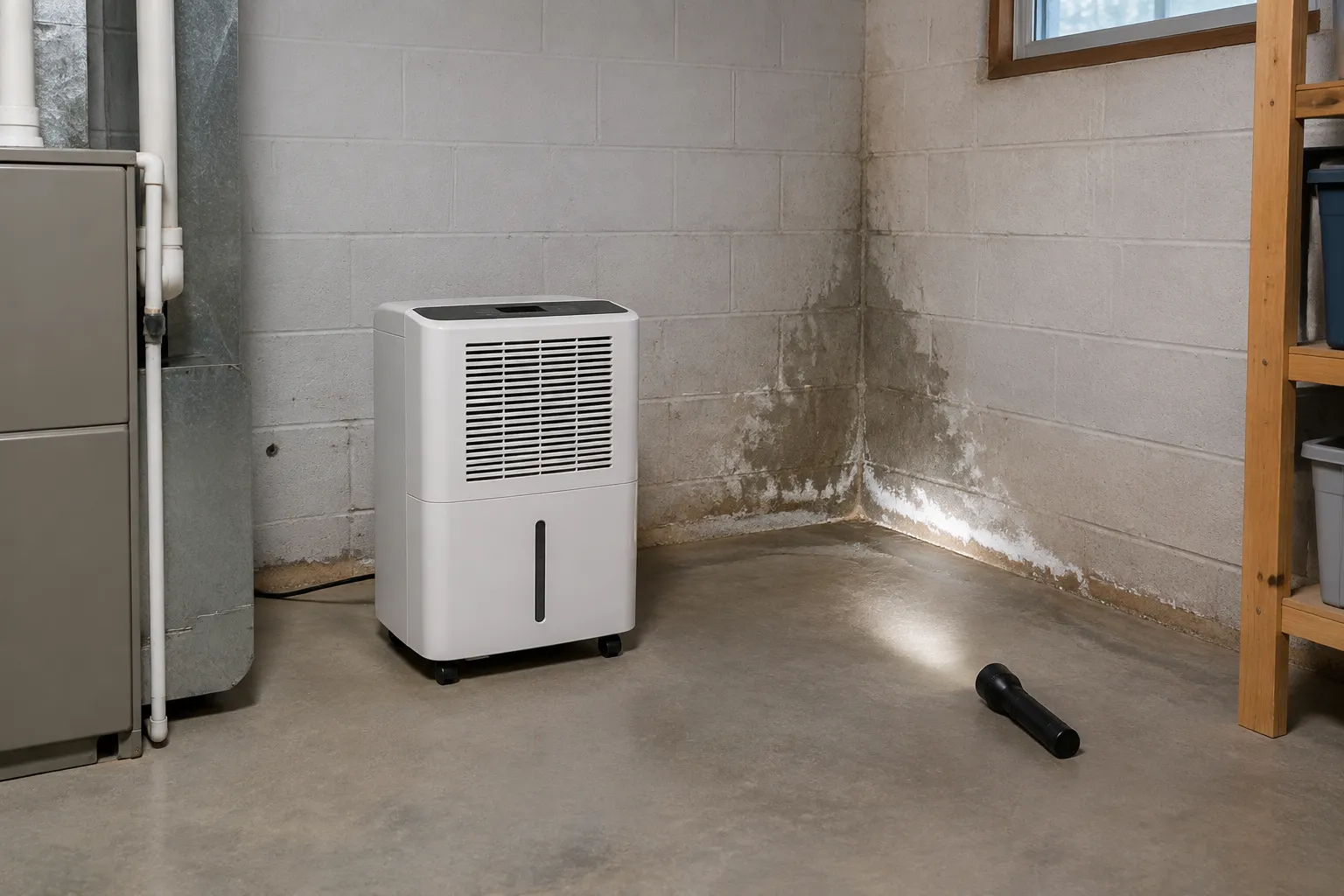
- White, chalky crust on concrete or block walls, which is mineral deposit left behind as water evaporates
- Dark stains, tide lines or streaks on walls, the floor or the bottom of wood framing
- Paint that bubbles, peels or flakes away from the wall surface
- A musty smell that lingers even after the space has been aired out
- Warped baseboards, swollen drywall paper or wood that feels soft when pressed
- Rust on metal shelving, tool bases or the lower edges of appliances
- Damp patches on the floor that appear after rain and dry slowly
Condensation Looks Like Moisture but Has Different Causes
Not every wet surface means water is coming through the foundation. Condensation forms when warm, humid indoor air meets a cold surface such as a cold water pipe, a concrete wall or the inside of a window well. Beads of water that appear on a cold pipe on a humid day and disappear as the room warms are a different problem from a damp line that spreads across a wall after rain. Condensation generally wipes away and returns with humidity, while a leak leaves a stain, a crust or a patch that stays wet between storms.
A simple test can help you separate the two. Tape a square of plastic sheeting, roughly the size of a sheet of paper, tightly to a bare section of wall or floor and leave it in place for a day or longer. If moisture collects on the side facing the room, indoor air is the likely source. If moisture collects on the side touching the concrete, water is moving through the wall or floor. Confirm what the test shows with an inspector before you decide on repairs.
A Walk Around Checklist for Your Own Inspection
Check the outside before the inside. Water that enters a basement generally starts at the surface, so these checks show whether the problem comes from the site. Work through the list on a dry day, then again during or just after heavy rain, and note what you observe.
- Look at the grade around the house and confirm the soil slopes away from the foundation
- Check that gutters are attached and that downspout extensions discharge water well away from the walls
- Look inside window wells for standing water, debris or a missing cover
- Walk the exterior foundation looking for cracks, gaps around pipes and spots where mulch or soil sits high against the wall
- If the basement has a sump pit, watch whether it fills during rain and whether the discharge line is clear
- Inside, check the joints where the floor meets the wall and the corners, and look for cracks that are wet or show a white crust
If the sump pit fills during rain, the guide to testing your sump pump explains what to check on the pump and its discharge before the wet season.
First Steps Once You Notice Moisture
Start by reducing the water coming in, because drying a space that keeps getting wet will not solve the problem. Move stored items off the floor and away from walls, and check that any dehumidifier or ventilation in the space is working. Photograph the stains, cracks and wet areas with the date on each photo so you can compare them after the next rain.
Avoid painting over stains or sealing cracks before you know the cause, because a coating can hide evidence an inspector needs and can trap moisture behind it. If you clean surface growth on a small area, wear gloves and a mask and keep the room ventilated. If mold covers more than a small area, or if anyone in the home has breathing concerns, ask a qualified remediation professional what they recommend before disturbing it.
Outdoor drainage matters through every season. The fall home maintenance checklist covers the same outdoor items before snow arrives, which makes it a useful companion to the walk around above.
When to Call a Professional and What to Ask
Call a professional when the source is unclear, when the wet area is growing, or when the damage appears to involve the structure. A home inspector can document conditions and explain what the findings may mean. A foundation or waterproofing contractor can diagnose the water path and propose repairs. Ask each one the same questions so you can compare the answers:
- What evidence shows whether the source is groundwater, surface water, condensation or a plumbing leak
- Which repairs address the cause and which only hide the symptom
- What the proposal includes, what it excludes and how the work will be checked afterward
- What warranty, if any, applies to the work and whether it is documented in writing
- How long the basement should be watched before you decide on larger repairs
Catch Basement Moisture Early and Act Calmly
Walk the outside and the inside on a dry day and again after rain, then write down what you see. Run the plastic sheet test before you commit to repairs, and do not paint over stains until the source is known. Ask any inspector or contractor for the evidence behind their findings and for a written scope before you accept work. SAP Real Estate serves Syracuse and Central New York with home sales and purchases, rentals and property management, and you can contact SAP Real Estate with questions about a property you own or plan to buy.