Furnace care before the heating season has two parts. You handle the simple, visible tasks that keep airflow and the thermostat working, and a qualified heating technician handles the combustion, gas and electrical checks that need instruments and training. Knowing where that line falls lets you book the right visit and stop waiting on work you could have done yourself.
Tasks you can do yourself
Start with the parts you can see and reach without opening sealed compartments. Turn off power to the unit before you touch anything inside it, and follow the manufacturer’s manual for your model.
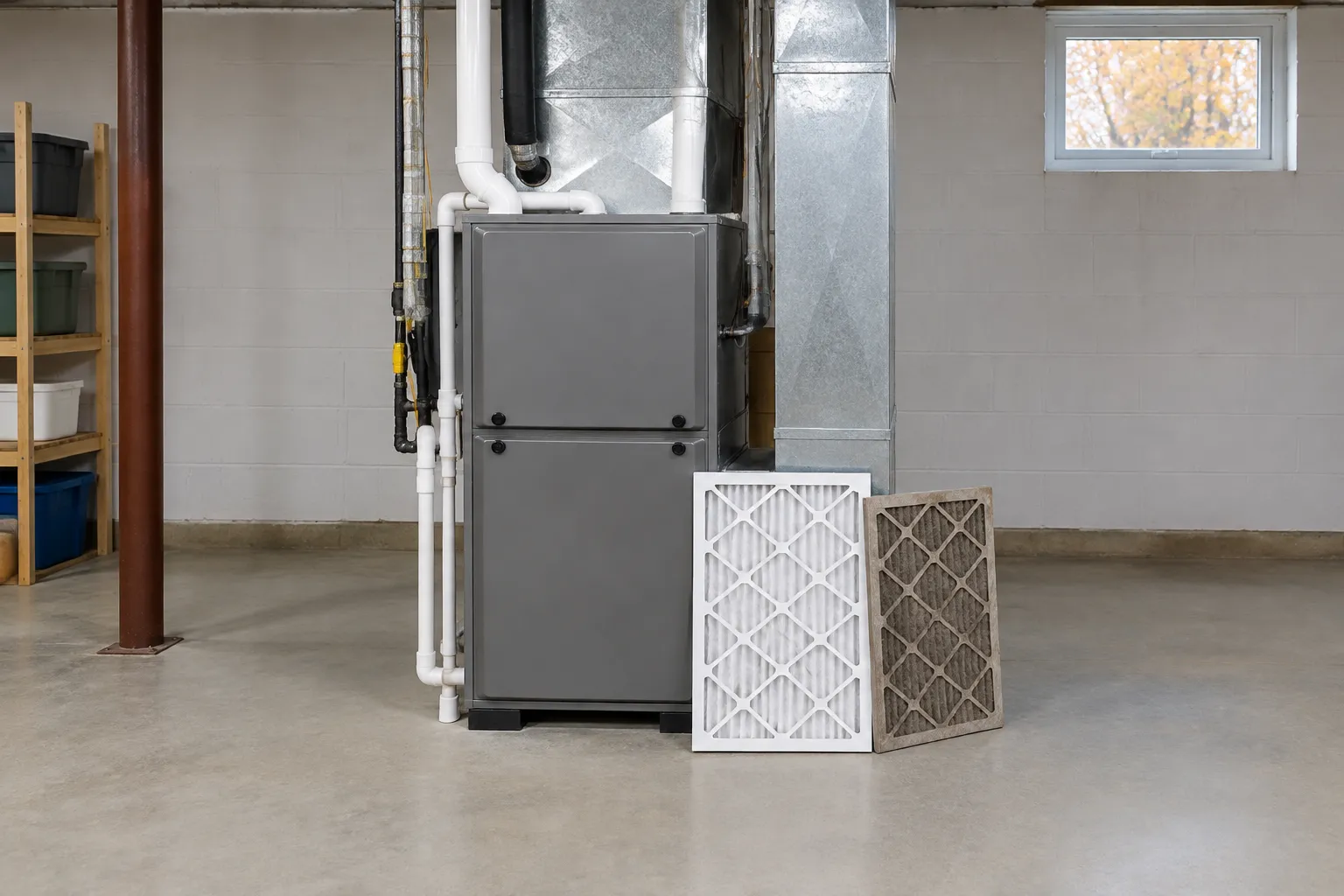
- Replace or clean the air filter. A dirty filter restricts airflow and can make the system work harder.
- Check that supply and return registers are open and not blocked by furniture, rugs or stored boxes.
- Vacuum loose dust and debris from the area around the cabinet, and keep the space clear of stored items, cleaning products and fuel containers.
- Set the thermostat to heat and confirm that the system starts and runs. Replace thermostat batteries if the display dims.
- Listen for new rattles, squeals or banging during a short test run, and note anything that is different from last season.
Checks that belong to a technician
Combustion, gas connections, heat exchanger condition and electrical controls need instruments and training to assess properly. Ask for a written record of what was tested and measured, not only a note that the system is working.
| Task | Who should do it | Why it matters |
|---|---|---|
| Combustion analysis and burner inspection | Qualified heating technician | Shows whether the burners fire cleanly and the exhaust is venting as intended |
| Gas connection and leak check | Qualified heating technician | Gas work should be checked only by someone trained to do it |
| Blower motor and belt inspection, where your unit has them | Qualified heating technician | Worn parts can reduce airflow and cause noise |
| Flame sensor and igniter cleaning | Qualified heating technician | Dirty sensors can cause the burner to shut off unexpectedly |
Safety signs that need prompt attention
Some signs mean you should stop using the furnace and get help the same day. Burning or unusual odors, soot or scorch marks near the unit, a burner flame that is yellow or flickers, and repeated unexplained shutdowns are all reasons to stop running it until a technician has looked at it. If you smell gas, leave the home and call your gas utility or emergency services from outside. If a carbon monoxide alarm sounds, move everyone outside and call emergency services, and do not go back inside until they confirm it is safe.
Questions to ask the technician
A short list of questions helps you turn the visit into a plan you can follow through the season.
- Which parts did you test, and what readings did you record?
- Are any components worn or close to failing, and how urgent is each repair?
- Is the flue or vent in good condition, and did you see any sign of corrosion or blockage?
- What should I watch for over the coming weeks, and what would call for a return visit?
- Does any recommended work or part affect my warranty coverage? Confirm the terms with the manufacturer or the warranty document.
Planning the schedule
Book the technician visit early enough to act on what it finds before the first hard cold arrives. Your own tasks fit around that visit. For the wider set of jobs to finish before snow arrives, read Central New York home readiness before snow.
Book the furnace visit before the first cold snap
Schedule the technician visit now, then repeat your own checks regularly while the heat is on, following your manual’s guidance. Keep a short log of filter changes and any unusual sounds or smells so the technician has a record to review. If anything in the safety section applies, stop using the furnace and arrange service before you run it again. SAP Real Estate is a Syracuse brokerage serving Central New York, and you can message SAP Real Estate about your property.