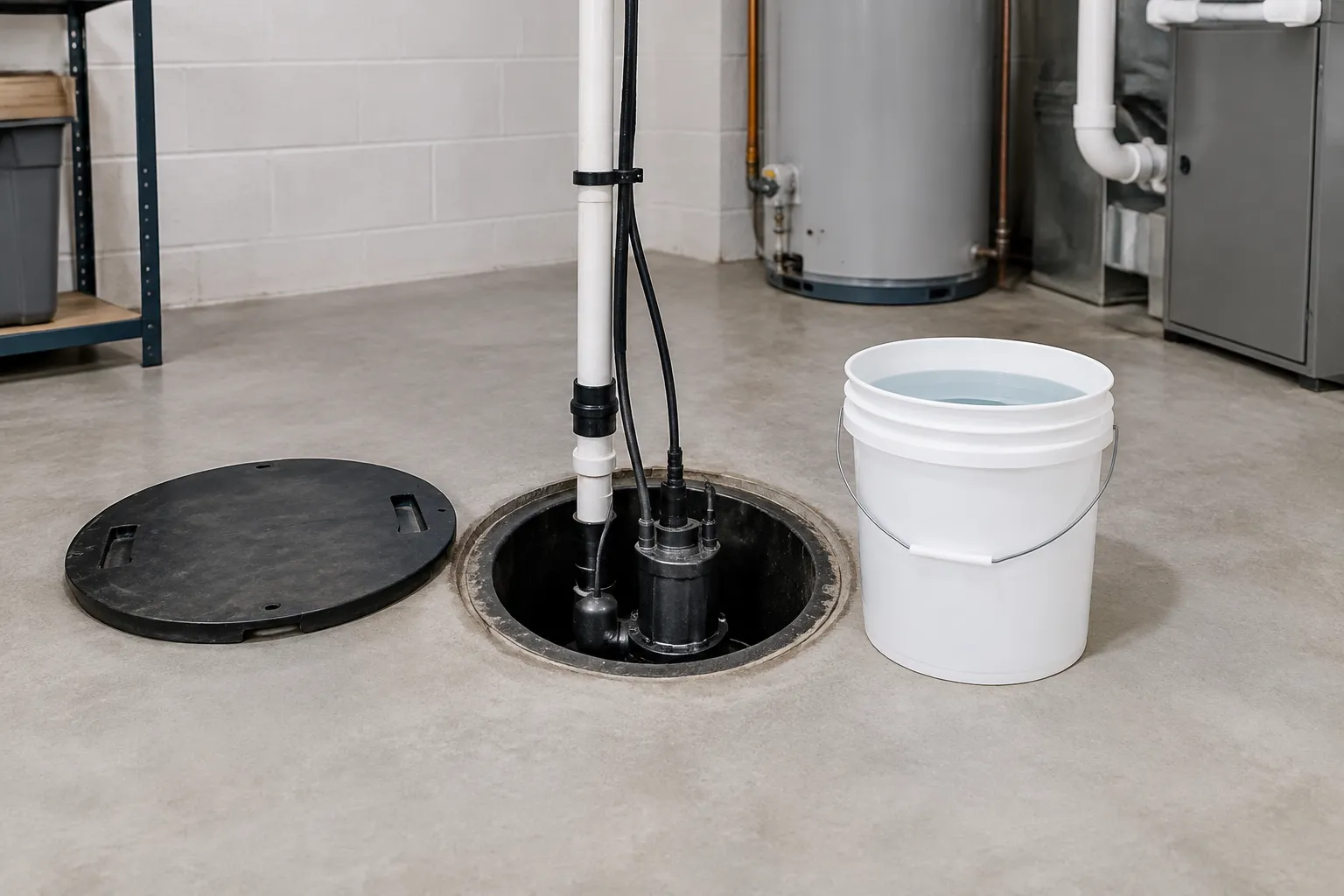
A sump pump only matters on the day water rises, and that is the wrong day to learn whether it works. The pump sits in a pit at the lowest point of the basement or crawl space, waiting for groundwater or drainage to fill it. A short test and a few routine checks will tell you whether it will start, empty the pit and carry the water away from your foundation when it is needed.
What a Sump Pump Does and Why Testing Matters
Water collects in the pit through a perforated liner or drain tile system. When the water reaches a set level, a float or sensor switches the pump on, and the pump pushes the water up through a discharge pipe toward an outlet outside the house. A pump that sits unused for months can seize, its float can stick, or its power can fail without any visible sign, so a test is the only practical way to confirm that each part still works together.
How to Test the Pump Step by Step
- Clear leaves, gravel and other debris from the pit and make sure the lid and intake are free of obstructions.
- Check that the float moves freely up and down and is not caught on the pit wall or a pipe.
- Pour water slowly into the pit from a bucket or hose while watching the float rise until the pump switches on.
- Confirm that the pump empties the pit and shuts off as the water level drops back to the lower float position.
- Walk outside and check that water exits the discharge line and flows away from the foundation rather than pooling near the house.
- Listen during the test for grinding, humming with no water movement, or switching on and off in quick cycles, and write down anything unusual.
Keep the test safe by keeping cords, outlets and your hands dry, and by standing clear of the pit while the pump runs. If the pump does not start, does not empty the pit or makes an unusual noise, turn your attention to the repair questions later in this article rather than repeating the test again and again.
Routine Care Between Tests
Care is mostly a matter of keeping the pump free to move and the water free to flow. Most of the work is simple, and it is worth scheduling it in the same months each year so that it does not depend on memory.
Cleaning the Pit and Intake
Silt, sand and small stones settle into the pit over time and can clog the intake screen or hold the float down. Unplug the pump first and follow the manufacturer instructions for lifting it out. Lift the pump carefully, rinse out the pit and screen with a hose, and reseat the pump so that its base sits flat. Then run the float test again to confirm the pump still starts freely after cleaning.
Checking the Discharge Line
Look for sags, cracks, loose joints and ice in the discharge pipe, especially where it leaves the house. A blocked or drooping line can push water back into the pit, which makes the pump cycle repeatedly and wear out faster. Check that the outlet is still pointing away from the foundation and that the ground there slopes away from the house.
Protecting Power During an Outage
A pump is only as reliable as its power supply. If you are considering a battery backup or a generator, ask the installer which parts of the system the backup will run, how long it is designed to operate under load and how it will be tested. Keep the pump on its own outlet where possible, and confirm with a licensed electrician that the circuit can handle the pump and any backup equipment you add.
Signs the Pump Needs Repair or Replacement
- The pump runs for long periods or cycles on and off more often than before, even when the rain has stopped.
- Water rises in the pit faster than the pump can clear it during a heavy storm.
- The motor hums without moving water, or the pump makes grinding or rattling sounds.
- The discharge line is damaged, leaks or stays wet at the outlet after the pump runs.
- The pump is more than a few years old and has stopped responding reliably to the float test.
Questions to Ask Before Deciding on a Replacement
A repair can be enough when the problem is a stuck float, a clogged intake or a loose discharge joint. Replacement becomes the better question when the motor itself has failed or when the pit is too small for the water that reaches it. Before you decide, ask a plumber or licensed contractor to inspect the pit, the motor and the discharge line, and ask them to explain which parts they would repair, which they would replace and what the work would not address. Ask how the water will be routed away from the house after the work is done.
Test Your Pump Before Water Tests You
Schedule a float test and a pit cleaning before the wet months arrive, and write down what you found so that next season you can spot a change. If the test reveals a problem with the motor, the discharge line or the power supply, get the repair plan in writing before the work begins. SAP Real Estate has served Syracuse and Central New York since 2017 with home sales and purchases, rentals and property management, so if a pump issue affects a property you are buying, selling or managing, contact SAP Real Estate about your property.