If a job on the Micron project is bringing you to Onondaga County, the first decision is not which house to pick. It is how settled your plans are, how far you are willing to drive, and whether you rent first or buy. This guide separates what has officially happened from what is only projected, describes the communities around the site with Census figures, and lists the practical questions worth asking before you commit to an address.
Every figure below names its source and the period it describes. Official sources were checked between October 9 and October 11, 2026. Projections are labelled as projections, because none of them is a promise about a specific town, street or price.
Progress at the Micron site so far
The Governor’s office reported the groundbreaking of Micron’s first semiconductor fabrication facility in Clay on January 16, 2026. On July 9, 2026 it reported that workers were pouring the first foundations for the campus, which marks the move from site preparation to vertical construction. Neither announcement gives a date for when production starts.
The larger numbers you will read about describe plans, not finished work. The project is announced with four fabs planned, and on the stated groundbreaking date only the first fab had broken ground. On its Micron page, Empire State Development projects that when the project is complete Micron will employ 9,000 people directly on site, supporting over 40,000 new permanent jobs. That page gives no target year, and the figures are projections, not jobs that exist today.
Where the site is and which communities surround it
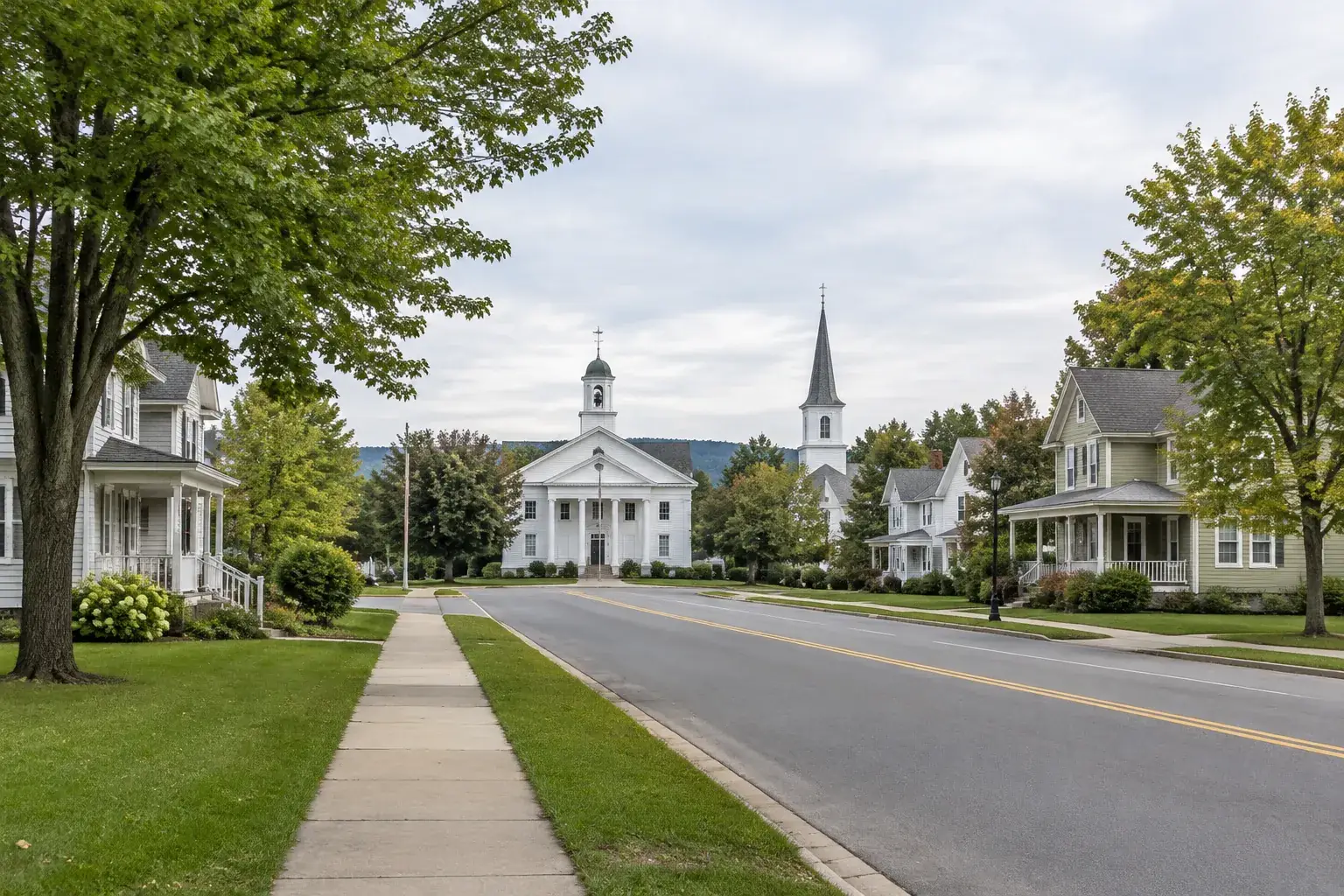
The site is in the Town of Clay, in northern Onondaga County. In New York a village is its own local government inside a town, so one address can belong to both. The Village of North Syracuse lies partly in the Town of Clay and partly in the Town of Cicero. The Village of Liverpool lies in the Town of Salina. This guide compares four Census units around the site: Clay town, Cicero town, North Syracuse village and Liverpool village.
School districts cross town lines
A town name does not tell you the school district. Matched against 2020 Census blocks, the Town of Clay overlaps five districts: the Baldwinsville, Central Square, Liverpool, North Syracuse and Phoenix Central School Districts. The Town of Cicero overlaps the Central Square, East Syracuse-Minoa and North Syracuse Central School Districts. The Village of North Syracuse lies entirely in the North Syracuse Central School District, and the Village of Liverpool lies entirely in the Liverpool Central School District. Because the town-level lines split, confirm the district of an exact address with the district office before you choose a home.
Housing in Clay, Cicero, North Syracuse and Liverpool
The tables use the American Community Survey 5-year estimates for 2020-2024, with the Census Bureau’s 90 percent margin of error after each figure. Town figures include the parts of any villages inside them. These are period estimates, not today’s market.
Households and types of homes
| Census unit | Households | Renter-occupied households | Single-family detached homes / all housing units | Median year housing was built |
|---|---|---|---|---|
| Clay town | 25,725 (+/-548) | 7,409 (+/-487) | 17,879 (+/-573) / 26,282 (+/-564) | 1978 (+/-1) |
| Cicero town | 12,932 (+/-409) | 2,506 (+/-392) | 10,981 (+/-415) / 13,584 (+/-402) | 1980 (+/-2) |
| North Syracuse village | 2,990 (+/-281) | 980 (+/-204) | 2,065 (+/-213) / 3,072 (+/-289) | 1959 (+/-2) |
| Liverpool village | 1,277 (+/-107) | 474 (+/-94) | 846 (+/-136) / 1,344 (+/-104) | in the oldest Census band (open-ended, no precise median) |
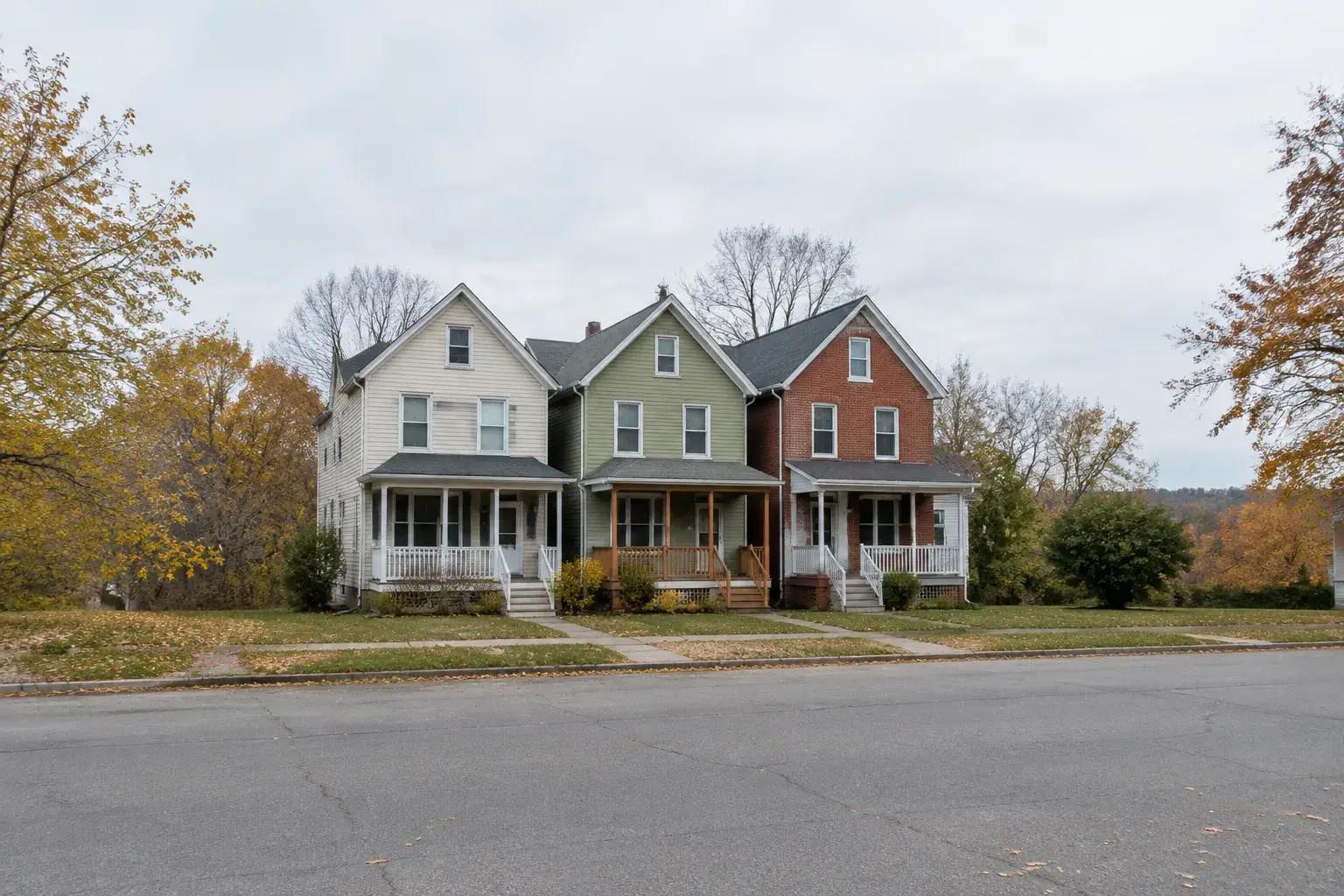
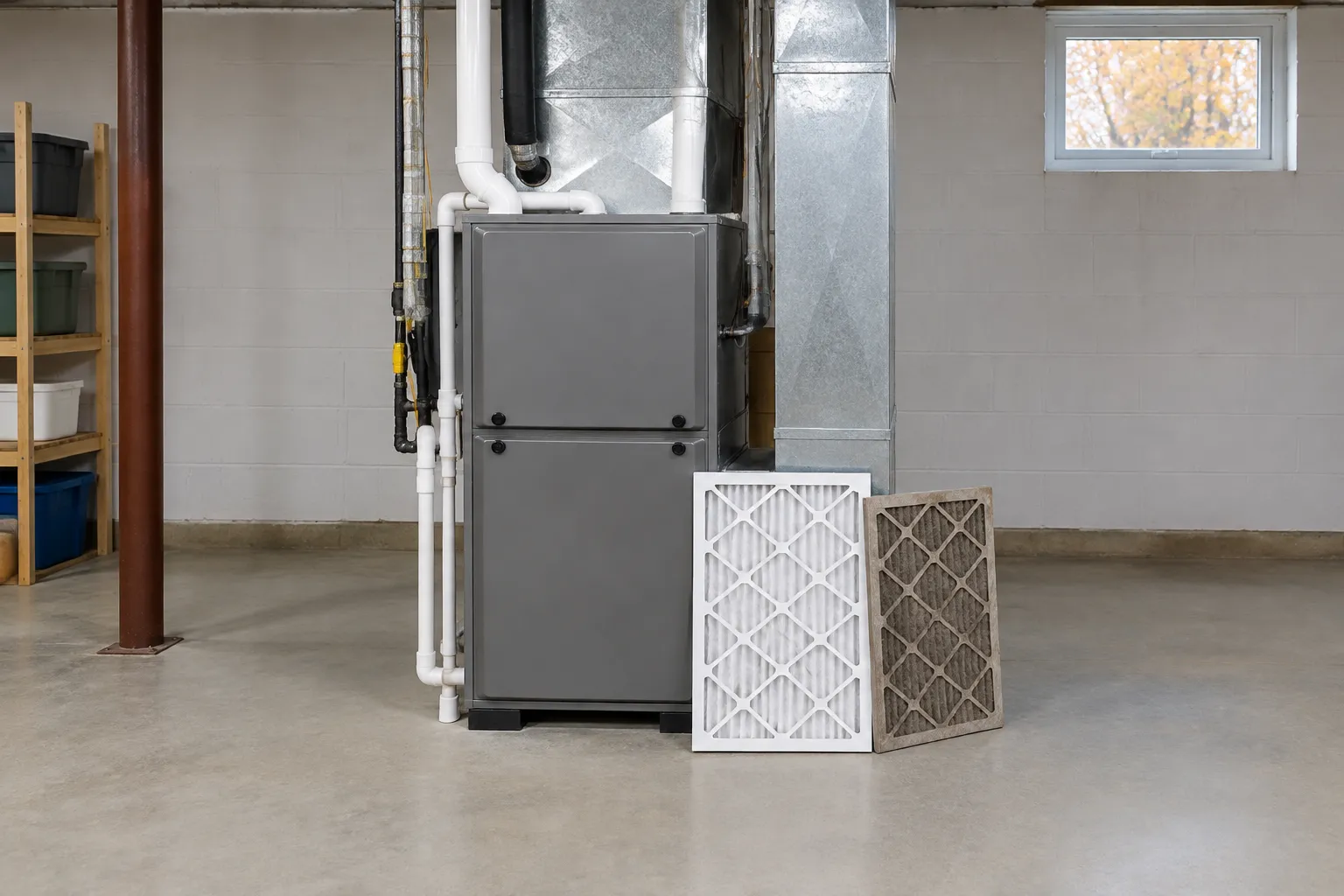
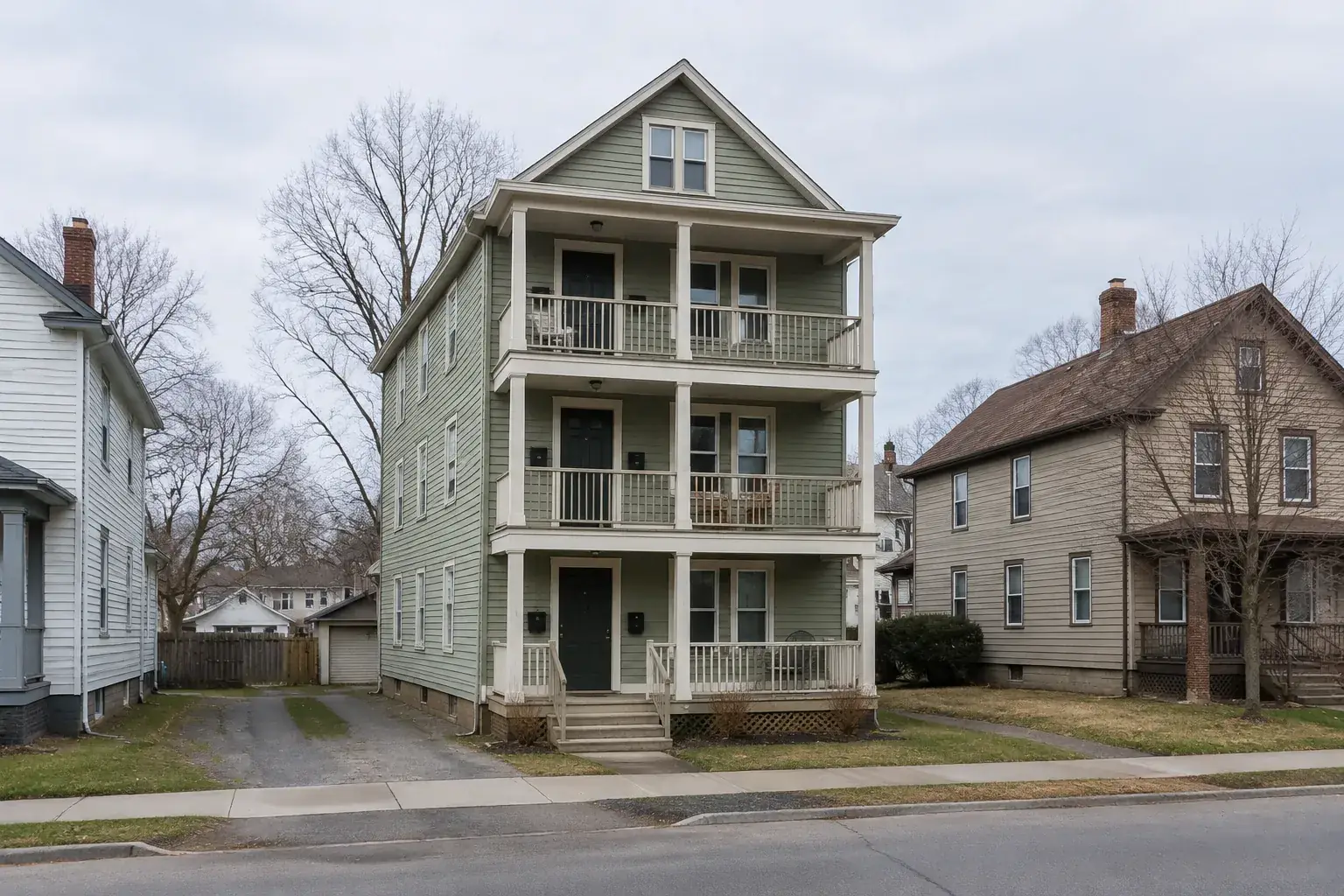
Single-family detached houses are the largest group of homes in all four places. Clay town also has a much larger stock of homes in apartment buildings: its buildings of 5 to 9 units, 10 to 19 units and 20 to 49 units each hold more than 1,400 homes (margins of 266 to 333), while none of those groups reaches 600 homes in the other three places. The older housing in North Syracuse and Liverpool village is a reason to ask about the age and condition of a home’s roof, heating, plumbing and wiring before you commit to it.
How residents get to work
| Census unit | Workers who drove alone / all workers | Worked from home | Mean travel time to work (residents) |
|---|---|---|---|
| Clay town | 24,458 (+/-945) / 31,586 (+/-893) | 4,149 (+/-471) | 21.4 minutes (+/-0.8) |
| Cicero town | 12,591 (+/-676) / 16,013 (+/-686) | 2,208 (+/-353) | 19.9 minutes (+/-0.9) |
| North Syracuse village | 2,964 (+/-337) / 3,664 (+/-293) | 248 (+/-95) | 19.0 minutes (+/-2.7) |
| Liverpool village | 1,020 (+/-181) / 1,495 (+/-216) | 276 (+/-103) | 15.9 minutes (+/-1.6) |
Most working residents in all four places drive alone to work. The travel time is the average commute of each place’s working residents who do not work from home, not a drive time to the Micron site. Read the margins before you compare places. Where two ranges do not overlap, the estimates show a clear difference; where they overlap, a real difference is still possible, so treat a small gap as uncertain rather than as proof either way. The tables describe buildings and households, not who lives in them or who a community suits.
Renting first or buying: the factors that decide it
There is no single right answer, and nothing in the official record predicts what prices or rents will do. The choice usually turns on how certain your plans are.
When renting first tends to fit
- Your assignment is tied to the construction phase, or its length is not yet fixed.
- You do not yet know which shift, gate or office you will report to, so you cannot judge a commute.
- You want to spend time in more than one community before choosing one.
- Your household is arriving in stages and its plans may change.
If you plan to rent while you look, you can browse current SAP Real Estate rental listings. Listings change often and are not chosen for their distance from the Micron site, so check the town or village of each address against the tables above.
When buying earlier tends to fit
- Your role is permanent and your work location is known.
- You expect to stay long enough that owning makes sense for your household.
- You have spoken with a lender about your own finances before you start looking, since this guide gives no financing advice.
What the regional housing study projects, and what it does not say
Empire State Development and the Department of State published a Central New York housing market study, prepared by HR&A and dated December 2024. It covers six counties, not one town, and it notes that all of its years run one year ahead of the likely timeline. Its main findings, all stated for the six-county region:
- Micron-related growth will require about 30,000 new homes, most of them by 2038, which it says means more than tripling the recent pace of home building.
- The region is projected to gain just over 42,000 jobs by 2038, close to 7,000 of them direct Micron employees.
- At the high end of its range, demand reaches up to 19,200 homes by 2028: about 9,100 rental homes and 10,100 for sale.
- Meeting minimum demand by 2038 would take at least 2,300 completed homes a year from 2025 through 2038, more than twice the recent annual permitting rate.
- Homes vacant and available for rent or sale were under 3 percent of the housing stock across the six counties, based on American Community Survey data for 2012 to 2022.
- At least 14,000 homes were at some stage of planning or predevelopment, and the study says the path to completion is uncertain for many of them. One project on its list is Great Northern Mall, at more than 1,600 units.
These job figures are not the same measure as the ones on the Empire State Development web page. The study’s just over 42,000 jobs count direct, indirect and induced jobs in a modelled six-county region by 2038. The web page’s 9,000 direct jobs supporting over 40,000 are stated for when the project is complete, with no year. Treat them as two separate projections and never add them together.
What the study does not say matters just as much. It gives no forecast for any single town, village or ZIP code, and it does not predict home prices or rents. A planned project on its list is not a building under construction. These are projections published as of the dates above; they are forecasts, not outcomes, and they may change.
Getting around: roads and transit as reported today
The I-81 Viaduct Project is changing how traffic moves through Syracuse. The New York State Department of Transportation reports that the Federal Highway Administration approved the redesignation of Interstate 481 as the new Interstate 81, moving through traffic away from downtown Syracuse ahead of the I-81 viaduct’s removal, which is still future work. NYSDOT describes the I-81 Viaduct Project as a program delivered in eight contracts.
Closer to the site, the NYSDOT Commissioner said in July 2026 that the department would soon begin the environmental process for a new project near the Micron campus to address expected growth in northern Onondaga County. That announcement gave no route, scope or date for the project.
In the Town of Clay, an estimated 189 (+/-140) working residents commuted by public transportation in 2020-2024, according to the American Community Survey. On October 9, 2026 the Centro route list included routes named for Liverpool (SY 46 and SY 48), Mattydale (SY 84) and North Syracuse – Cicero (SY 88). A route name does not tell you its stops, hours or frequency, so read the timetable before counting on a bus. No Centro route to the Micron site was verified for this guide.
Questions to ask before you choose an address
- Is the address inside a village, or only in a town? The answer tells you which local government and which offices serve it.
- Which school district serves the address? District lines in this area do not follow town lines, so confirm the district for the exact address.
- How long is your commute at the hours you will actually work, measured on a trial drive rather than taken from an average?
- How certain is your timeline, and how long a commitment can you make on a rental or a purchase?
- What is the full cost to move in, listed item by item, and have you received it in writing?
- How old is the home, and what condition are its roof, heating, plumbing and wiring in?
Planning your move to the Clay and North Syracuse area
SAP Real Estate has worked in Central New York since 2017, helping clients with home sales and purchases, rentals and property management. If you are weighing renting against buying near the Micron site, you can contact our team to talk through the communities on your list, including the rentals we list at the time you plan your move.